
Menstruation is a natural part of a woman’s life, yet it often comes with challenges like cramps, fatigue, mood swings, bloating, and emotional ups and downs. For many, this phase can feel overwhelming, disrupting daily routines and overall well-being. Enter yoga—a time-honored practice that combines physical postures (asanas), breathing exercises (pranayama), meditation, and mindfulness to support the body and mind. This ultimate guide explores how yoga and holistic wellness strategies can transform your menstrual experience into one of empowerment and ease.
Yoga isn’t just about flexibility or strength; it’s a holistic system rooted in ancient Indian traditions that promotes balance in the body’s energy systems. During menstruation, the focus shifts to gentle, restorative practices that honor the body’s natural rhythms. According to yogic philosophy, this time aligns with “apana vayu,” the downward-flowing energy that supports elimination and release. By incorporating yoga, you can alleviate physical discomfort, stabilize emotions, and foster a deeper connection with your cycle.
In this comprehensive guide, we’ll cover everything from understanding your menstrual cycle to safe yoga practices, what to avoid, complementary lifestyle tips, and the science backing it all. Whether you’re a beginner or seasoned yogi, these insights will help you navigate your periods with grace. We’ll draw from expert recommendations, including those from yoga traditions like Hatha and Iyengar, to ensure safe, effective advice. Remember, everyone’s body is unique—consult a healthcare professional if you have conditions like endometriosis, PCOS, or heavy bleeding before starting.
By the end of this guide, you’ll have a toolkit to make menstruation a period of self-care rather than struggle. Let’s dive in and discover how yoga can be your ally for menstrual wellness.
Understanding Menstruation and Its Impact on the Body
Menstruation, often called your “period” or “moon cycle,” is the monthly shedding of the uterine lining when pregnancy doesn’t occur. It typically lasts 3-7 days and is part of a larger 28-day (on average) menstrual cycle divided into four phases: menstrual (days 1-5), follicular (days 6-14), ovulatory (around day 14), and luteal (days 15-28). Hormones like estrogen and progesterone fluctuate throughout, influencing everything from energy levels to mood.
Physically, common symptoms include abdominal cramps due to uterine contractions, lower back pain, headaches, breast tenderness, and digestive issues like bloating or constipation. These arise from prostaglandin release, which triggers inflammation and muscle spasms. Emotionally, many experience premenstrual syndrome (PMS) symptoms such as irritability, anxiety, or depression, linked to serotonin dips and hormonal shifts.
From a yogic perspective, menstruation is a time of introspection and renewal. Ayurveda, yoga’s sister science, views it as a detoxification process dominated by “vata” dosha (air and ether elements), which can lead to imbalances like dryness or nervousness if not managed. Stress exacerbates these issues, creating a cycle of discomfort.
Modern lifestyles compound problems: poor diet, lack of sleep, and sedentary habits can intensify symptoms. For instance, high caffeine intake may worsen cramps, while dehydration aggravates headaches. Understanding these impacts empowers you to use yoga as a targeted intervention. Gentle practices can stimulate blood flow, reduce inflammation, and calm the nervous system, turning a challenging time into one of healing.
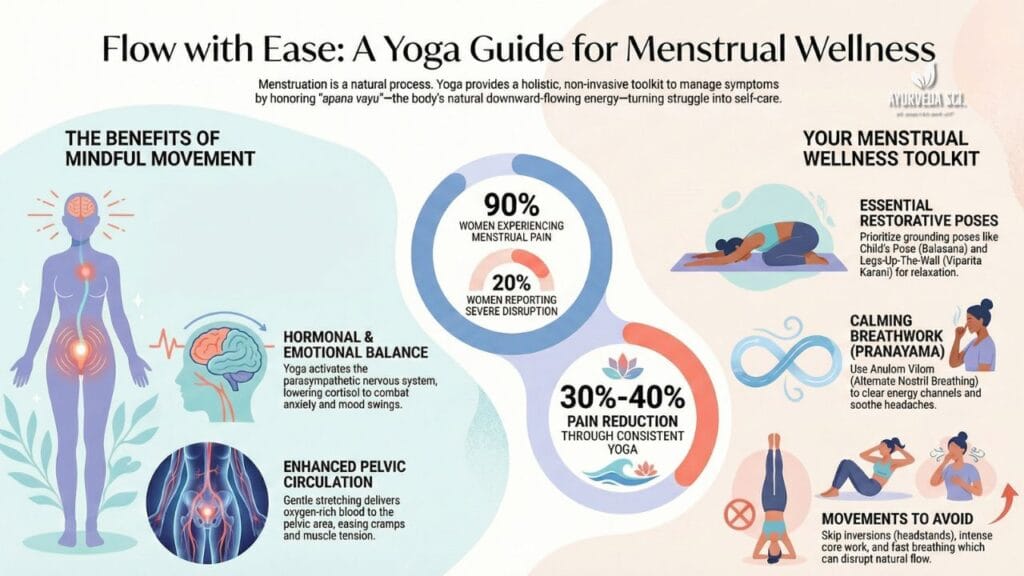
Statistics highlight the prevalence: Up to 90% of women experience menstrual pain, with 20% reporting severe disruption. Yoga offers a non-invasive way to address this, promoting long-term hormonal balance when practiced consistently.
Benefits of Yoga During Menstruation
Yoga’s benefits during menstruation are multifaceted, addressing physical, emotional, and energetic needs. Regular practice can significantly reduce pain intensity and duration, as shown in studies where participants reported less reliance on pain medication after incorporating yoga.
Physically, yoga enhances circulation, which helps ease cramps by delivering oxygen-rich blood to the pelvic area. Poses that gently stretch the abdomen and hips release tension in muscles like the psoas and piriformis, often tight during periods. This can alleviate back pain and bloating. Breathing techniques oxygenate the body, reducing fatigue and supporting detoxification through improved lymphatic flow.
Emotionally, yoga activates the parasympathetic nervous system, lowering cortisol (stress hormone) levels. This combats mood swings and anxiety, fostering a sense of calm. Practices like meditation improve mindfulness, helping you observe symptoms without overwhelm. Over time, yoga balances hormones by regulating the hypothalamic-pituitary-adrenal axis, potentially leading to more regular cycles.
Energetically, yoga aligns with the menstrual phase’s inward focus. It encourages self-compassion, reducing the societal pressure to “push through” discomfort. Benefits extend beyond periods: consistent yoga can mitigate PMS, improve sleep, and boost overall vitality. For example, a study found that women practicing yoga twice weekly experienced 30-40% less menstrual pain.
Incorporating yoga also builds body awareness, allowing you to track cycle patterns and adjust practices accordingly. It’s empowering—transforming menstruation from a burden to a barometer of health.
Safe Yoga Practices During Menstruation
During your period, prioritize restorative, grounding practices over vigorous ones. Focus on poses that open the hips, relax the abdomen, and promote relaxation. Practice in a quiet space, using props like bolsters, blankets, or blocks for support. Aim for 20-45 minutes daily, listening to your body—if something feels off, stop.
Pranayama: Breathing Exercises for Relief
Pranayama is ideal during menstruation as it calms the mind without straining the body. Avoid intense techniques like Kapalbhati or Bhastrika, which generate heat. Instead, try these:
- Ujjayi Pranayama (Ocean Breath): Sit comfortably, inhale deeply through the nose with a slight throat constriction, creating a soft “ha” sound. Exhale similarly. Do 5-10 minutes to reduce stress and balance emotions.
- Anulom Vilom (Alternate Nostril Breathing): Close the right nostril, inhale left; switch and exhale right. Alternate for 5-10 rounds. It clears energy channels and eases headaches.
- Bhramari Pranayama (Bee Breath): Inhale deeply, exhale with a humming sound, fingers on eyes and ears. 5-7 rounds soothe irritability.
- Sheetali/Sitkari Pranayama: Inhale through rolled tongue (Sheetali) or clenched teeth (Sitkari) for cooling effects on inflammation.
These breaths enhance oxygenation, reducing cramps by massaging organs gently.
Asanas: Gentle Poses for Comfort
Choose forward bends, hip openers, and supine poses to support downward energy flow. Hold each for 1-5 minutes with deep breaths.
- Baddha Konasana (Bound Angle Pose): Sit with soles together, knees out. Lean forward gently. Opens hips, relieves pelvic congestion.
- Supta Baddha Konasana (Reclining Bound Angle): Lie back with props under knees. Promotes relaxation and reduces back pain.
- Balasana (Child’s Pose): Kneel, fold forward. Stretches the back, calms the mind.
- Viparita Karani (Legs-Up-the-Wall): Lie with legs elevated. Drains fatigue, improves circulation without inversion.
- Adho Mukha Svanasana (Downward Dog): Modified with head support for gentle stretch.
For cramps, try Marjaryasana-Bitilasana (Cat-Cow) for spinal mobility.
Meditation and Yoga Nidra
Yoga Nidra, a guided relaxation, is perfect for periods—lie in Savasana, following a script or app for 20 minutes. It reduces stress and pain perception. Simple meditation, focusing on breath or a mantra like “Om,” balances emotions.
Combine these for a full session: Start with pranayama, move to asanas, end with Nidra.
What to Avoid During Menstruation
While yoga is beneficial, certain practices can disrupt flow or increase discomfort. Key avoidances:
- Inversions: Headstand (Sirsasana), Shoulderstand (Sarvangasana), Handstand. They reverse apana vayu, potentially causing heavier bleeding or cramps.
- Intense Backbends: Wheel (Urdhva Dhanurasana), Pigeon (Kapotasana). Compress the abdomen, aggravating pain.
- Core-Intensive Poses: Boat (Navasana), arm balances like Crow (Bakasana). Strain the pelvis.
- Fast Pranayama: Kapalbhati, Bhastrika. Increase internal heat and pressure.
- Vigorous Styles: Skip hot yoga or power flows; opt for yin or restorative.
If you have heavy flow, avoid standing poses without support. Always prioritize rest—some traditions like Ashtanga recommend no asanas on heavy days.
Complementary Wellness Tips for Menstrual Health
Yoga shines brighter when paired with lifestyle adjustments. Nutrition plays a key role: Eat iron-rich foods like spinach and lentils to combat fatigue, and anti-inflammatory options like turmeric tea for cramps. Stay hydrated—aim for 8-10 glasses daily—and limit caffeine and sugar, which worsen bloating.
Sleep is crucial; aim for 7-9 hours to regulate hormones. Incorporate herbal remedies like ginger for nausea or chamomile for relaxation. Track your cycle with apps to anticipate symptoms and plan gentle yoga days.
Mindful movement beyond yoga, like walking, supports circulation. Stress management through journaling or nature time enhances yoga’s effects. For holistic care, consider Ayurveda: Warm oils for abhyanga (self-massage) balance vata.
Integrate these for comprehensive wellness, making your cycle a harmonious part of life.
The Science Behind Yoga for Menstrual Wellness
Research supports yoga’s efficacy. A review found it reduces dysmenorrhea (painful periods) by lowering stress and inflammation. Studies show pranayama decreases cortisol, while asanas improve pelvic blood flow. Yoga Nidra aids in pain management by promoting deep rest. Overall, consistent practice leads to better quality of life.
Conclusion
Embracing yoga during menstruation empowers you to honor your body’s rhythms. With safe practices, mindful avoidance, and holistic tips, transform discomfort into growth. Start small, listen to your body, and watch your wellness flourish. For more, explore our related articles on specific topics.
FAQ
Is it safe to do yoga during my period?
Yes, gentle yoga is safe and beneficial for most women, helping with pain and mood. Avoid inversions and intense poses; consult a doctor for underlying issues.
Which pranayamas are best during menstruation?
Ujjayi, Anulom Vilom, Bhramari, and Sheetali are excellent for calming and cooling the body. Skip fast breaths like Kapalbhati.
Why avoid inversions during periods?
Inversions may disrupt natural downward flow, potentially increasing cramps or flow. Some traditions advise against them for energetic reasons.
Can yoga help with PMS symptoms?
Absolutely, regular yoga reduces stress, balances hormones, and eases emotional symptoms like anxiety.
How often should I practice yoga for menstrual benefits?
2-3 times weekly throughout your cycle yields the best results, with gentle sessions during periods.
What if I have heavy periods, can I still do yoga?
Yes, but stick to restorative poses and monitor your energy. Poses like Ardha Chandrasana may help with heavy flow.