

Millions of people begin their day with a cup of coffee simply to feel more awake. But according to new scientific research, that daily habit may also be supporting something much deeper—your gut microbiome.
Researchers have found that both regular and decaffeinated coffee appear to influence the community of bacteria living inside the digestive system. Because these microbes are closely connected with the brain through what’s known as the gut-brain axis, the findings suggest coffee’s benefits may extend beyond energy and alertness.
While scientists caution that more research is needed, the study adds to growing evidence that coffee is far more than just a source of caffeine.
Why Scientists Are Paying More Attention to Coffee
Coffee is one of the most widely consumed beverages in the world. Over the last decade, research has linked moderate coffee consumption with several potential health benefits, including:
- Better heart health
- Lower risk of certain liver diseases
- Reduced inflammation
- Improved metabolic health
- Better cognitive performance
Now researchers are exploring another important question:
How does coffee affect the trillions of microbes living in our digestive system?
This area of research has become increasingly important because scientists now recognize that gut bacteria influence digestion, immunity, inflammation, mood, and even memory.
What the New Research Found

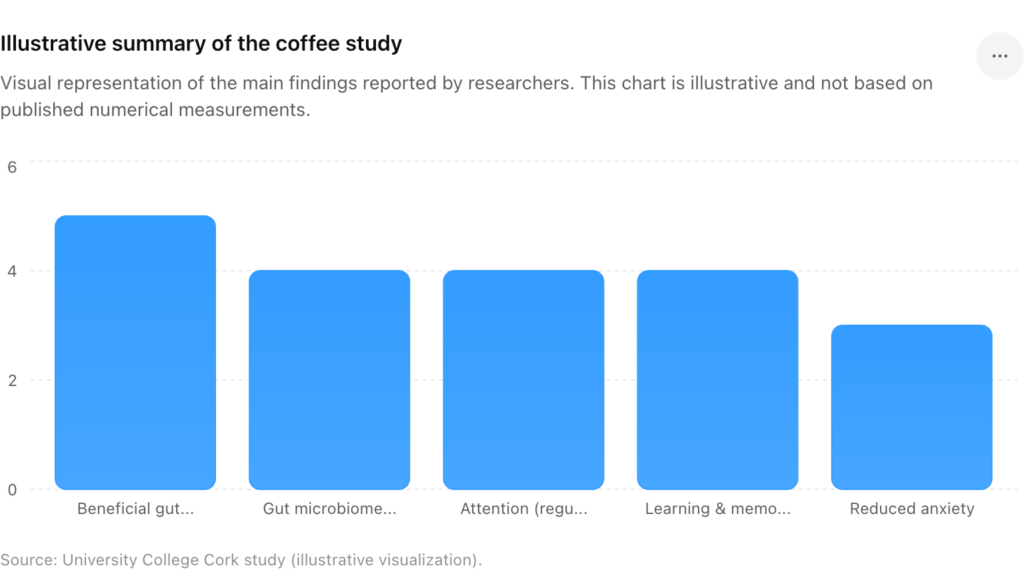
Researchers studying regular coffee drinkers observed noticeable differences in their gut microbiome compared with people who rarely drank coffee.
Two bacterial species appeared in greater numbers among coffee drinkers:
- Eggerthella species
- Cryptobacterium curtum
Scientists believe these bacteria may contribute to maintaining a healthier balance within the gut ecosystem, although researchers are still investigating their exact role.
Rather than acting like medicine, coffee appears to create an environment that supports certain beneficial microbial activities.
Coffee Compounds Explained
| Coffee Component | What It Does | Found in Regular | Found in Decaf |
|---|---|---|---|
| Caffeine | Improves alertness | ✅ | Small amount |
| Polyphenols | Feed beneficial gut bacteria | ✅ | ✅ |
| Antioxidants | Help reduce oxidative stress | ✅ | ✅ |
| Bioactive compounds | Support metabolism | ✅ | ✅ |
Why Decaf Coffee Surprised Researchers
One of the most interesting discoveries was that decaffeinated coffee produced many of the same positive effects.
Participants who consumed decaf showed improvements in learning and memory, suggesting caffeine isn’t the only ingredient responsible for coffee’s health effects.
Researchers believe naturally occurring compounds called polyphenols may explain much of the benefit.
Polyphenols are plant compounds with antioxidant and anti-inflammatory properties. They also act as food for certain beneficial gut bacteria, helping those microbes thrive.
This means coffee isn’t simply delivering caffeine—it may also be feeding your microbiome.
Regular Coffee Appeared to Affect Mood Too
Participants who consumed caffeinated coffee showed improvements in attention and reported feeling less anxious in some situations.
Scientists believe this may result from a combination of caffeine’s stimulating effects and changes occurring within the gut-brain axis.
The gut and brain constantly communicate through nerves, hormones, and immune signals. As gut bacteria change, they may influence how the brain functions.
Researchers are increasingly referring to the microbiome as an important part of mental health.
What Is the Gut-Brain Axis?
The gut-brain axis is the two-way communication network connecting your digestive system and your brain.
Gut bacteria help produce important chemicals involved in mood and brain function, including serotonin and short-chain fatty acids.
When your microbiome is healthy, it may support:
- Better digestion
- Stronger immunity
- Reduced inflammation
- Improved mood
- Healthier cognitive function
This is why scientists are paying increasing attention to everyday foods—including coffee—that may influence the microbiome.
Coffee Isn’t Perfect
The researchers also noted an important limitation.
Habitual coffee drinkers in the study showed higher levels of impulsivity and emotional reactivity than non-coffee drinkers.
This doesn’t necessarily mean coffee causes these behaviors. Many other lifestyle factors could be involved.
The study also cannot prove that coffee alone directly changes gut bacteria. It only demonstrates an association between coffee consumption and differences in the microbiome.
Future clinical trials will help determine exactly how coffee produces these effects.
What This Means for Your Daily Cup
The findings don’t suggest everyone should suddenly start drinking large amounts of coffee.
Instead, they reinforce existing evidence that moderate coffee consumption can be part of a healthy lifestyle for many adults.
If you already enjoy coffee, this research provides another possible reason your morning routine may be supporting overall health.
If you’re sensitive to caffeine, decaffeinated coffee may still offer many of the same microbiome benefits because of its naturally occurring polyphenols.
However, adding excessive sugar, flavored syrups, or heavy cream may reduce some of the health advantages.
How to Get the Most Health Benefits from Coffee
Experts generally recommend:
- Drink coffee in moderation.
- Choose black coffee or use minimal added sugar.
- Avoid consuming coffee late at night if it affects sleep.
- Pair coffee with a balanced, fiber-rich diet to further support gut bacteria.
- Stay hydrated throughout the day.
Remember that no single food or beverage can replace healthy eating, regular exercise, and adequate sleep.
Frequently Asked Questions
Is coffee good for gut health?
Current research suggests moderate coffee consumption may encourage beneficial changes in the gut microbiome, although scientists are still studying the long-term effects.
Is decaf coffee healthy?
Yes. New research indicates decaffeinated coffee may offer several of the same microbiome and cognitive benefits as regular coffee because it still contains polyphenols.
Does coffee improve brain function?
Coffee may improve alertness, attention, and certain aspects of cognitive performance. Emerging research also suggests it could influence brain health indirectly through the gut-brain axis.
Should everyone drink coffee?
Not necessarily. People who are pregnant, highly sensitive to caffeine, or have certain medical conditions should follow advice from their healthcare professional.
The Bottom Line
Coffee has long been appreciated as a morning energy boost, but scientists are discovering that its effects reach much further than caffeine alone.
By influencing the gut microbiome, supporting beneficial bacteria, and potentially affecting communication between the gut and brain, coffee may play a larger role in overall health than previously understood.
While researchers still have many questions to answer, one message is becoming increasingly clear: your morning cup of coffee is a biologically active beverage that interacts with multiple systems throughout the body—not just your brain.
Recommended for you: