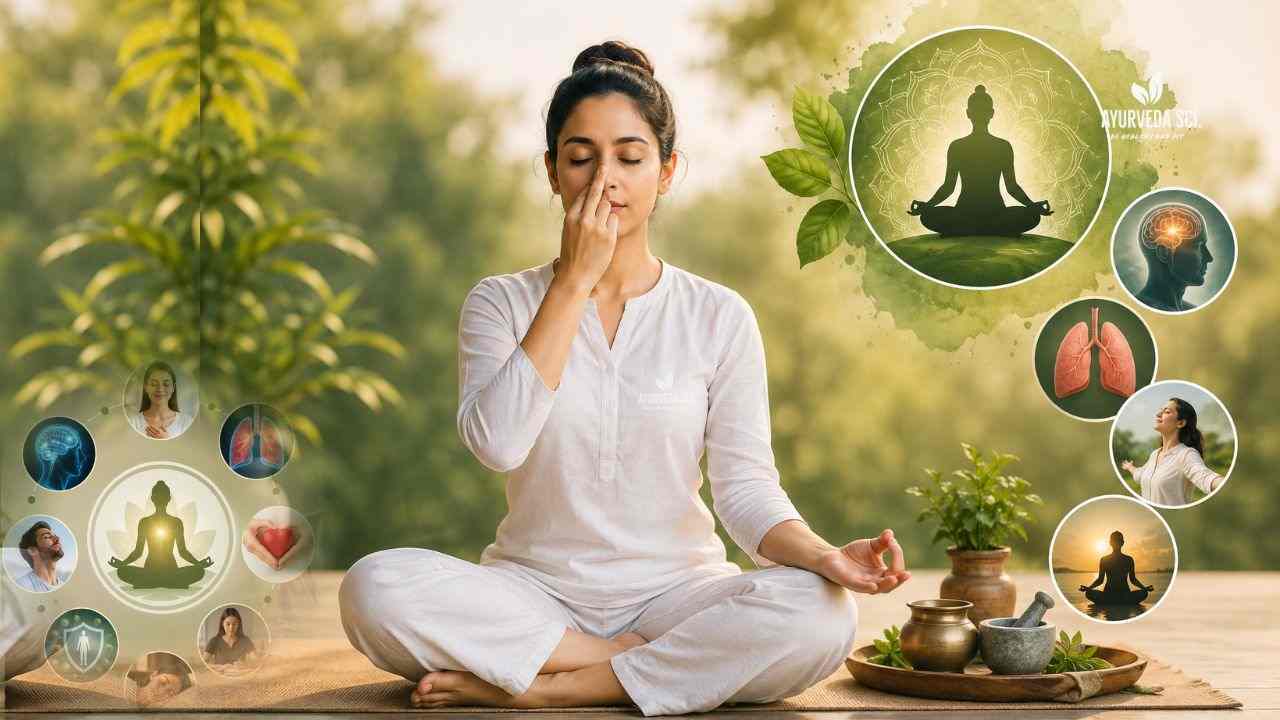
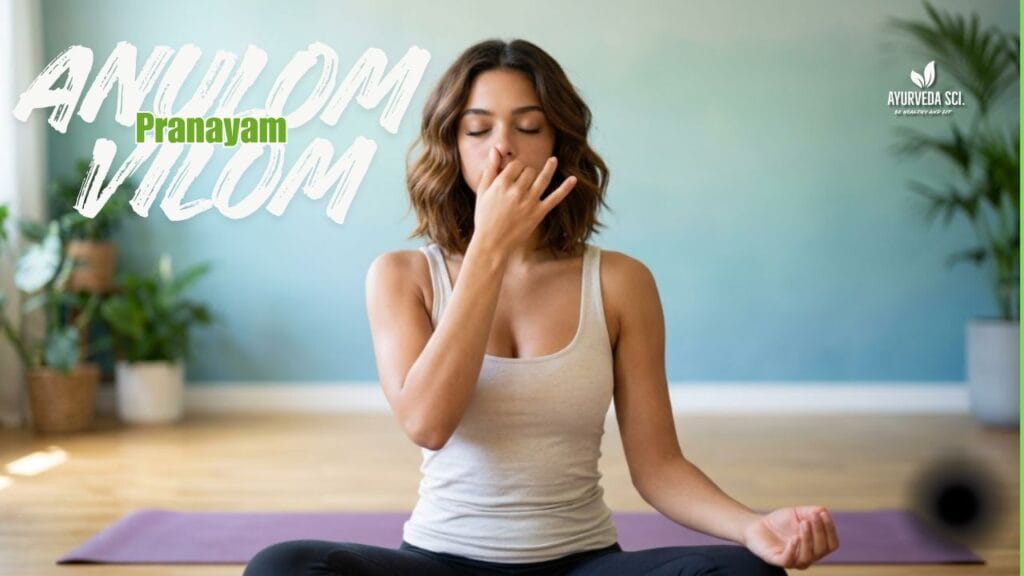
Anulom Vilom is one of the most widely practiced breathing techniques in yoga. It is simple enough for beginners, requires no equipment, and can be practiced as part of a daily yoga, relaxation, or mindfulness routine.
You may have heard that Anulom Vilom can reduce stress, improve concentration, support better sleep, regulate blood pressure, or “balance” the body. But how much of this is actually supported by modern research?
The answer is more nuanced than many wellness articles suggest.
Anulom Vilom is traditionally practiced by alternating the breath between the left and right nostrils. Modern research on alternate-nostril breathing has investigated outcomes including blood pressure, heart rate, autonomic function, stress, anxiety, and other measures. Some findings are encouraging, but the evidence varies by outcome and study quality.
This guide explains what Anulom Vilom is, how to do it correctly, its potential benefits, the best time to practice, common mistakes, precautions, and what scientific research actually tells us.
Anulom Vilom is one of the most widely practiced pranayama techniques in yoga. It involves alternate nostril breathing and is traditionally believed to balance the body’s energy channels while calming the mind. It is simple enough for beginners, requires no equipment, and can be practiced as part of a daily yoga, relaxation, or mindfulness routine.
You may have heard that Anulom Vilom can manage stress, improve concentration, support respiratory health, better sleep, regulate blood pressure, or “balance” the body and create a sense of mental calm. But how much of this is actually supported by modern research?
The answer is more nuanced than many wellness articles suggest.
Anulom Vilom is traditionally practiced by alternating the breath between the left and right nostrils. Modern research on alternate-nostril breathing has investigated outcomes including blood pressure, heart rate, autonomic function, stress, anxiety, and other measures. Some findings are encouraging, but the evidence varies by outcome and study quality.
This guide explains what Anulom Vilom is, its Ayurvedic background what Anulom Vilom is, how to do it correctly, its potential benefits, the best time to practice, common mistakes, precautions, and what scientific research actually tells us.
Quick answer: Anulom Vilom is a yogic alternate-nostril breathing practice. A simple beginner version involves gently inhaling through one nostril, exhaling through the other, then reversing the pattern. Beginners can practice without prolonged breath-holding. The aim is smooth, comfortable breathing—not forcing the breath.
Anulom Vilom is an alternate nostril breathing technique in yoga. It is practiced by inhaling through one nostril, exhaling through the other, and repeating the cycle in a controlled rhythm. It may help promote relaxation, improve breathing awareness, and support stress management when practiced regularly.
What Is Anulom Vilom?
Anulom Vilom is a pranayama practice that involves breathing alternately through the left and right nostrils. In yoga traditions, it is often associated with balancing the flow of energy through the Ida and Pingala nadis.
The practice is commonly taught as a beginner-friendly breathing exercise because it is gentle, requires no equipment, and can be practiced while sitting comfortably.
It is a yogic breathing practice in which you alternately inhale and exhale through the left and right nostrils.
Although often grouped with Nadi Shodhana, and modern yoga sources often use the two terms interchangeably. However, terminology and technique can differ between yoga traditions and teachers. Some traditions differentiate the two techniques based on breath retention and rhythm.
Some versions include breath retention, while simpler beginner versions do not.
For someone learning the practice for the first time, there is no need to begin with complicated breathing ratios or prolonged breath-holding.
In simple terms, Anulom Vilom helps you focus on slow, controlled breathing while alternating the nostrils in a specific sequence.
Meaning and Sanskrit Origin
The term Anulom Vilom comes from Sanskrit:
- Anulom means “with the grain,” “natural,” or “in proper order.”
- Vilom means “against the grain” or “reverse.”
Together, the term reflects the alternating pattern of inhaling and exhaling through opposite nostrils. In yogic philosophy, this practice symbolizes balancing opposite energies and promoting harmony between body and mind.
History and Traditional Background
Anulom Vilom is rooted in the ancient yogic tradition of pranayama, which refers to techniques for regulating the breath. Classical yoga texts such as the Hatha Yoga Pradipika and Gheranda Samhita discuss various breathing practices aimed at purifying the nadis and preparing the mind for meditation.
In traditional practice, alternate nostril breathing was considered a method for improving concentration, stabilizing the mind, and balancing subtle energy. Over time, Anulom Vilom became one of the most accessible pranayama practices taught in yoga classes and wellness programs around the world.
Ayurvedic & Yogic Perspective on Anulom Vilom
In Ayurveda and yogic philosophy, health is often described as a state of balance between physical, mental, and energetic factors. Anulom Vilom is traditionally believed to support this balance by harmonizing the flow of prana, or vital life energy.
Ida and Pingala Nadis
- Ida Nadi is associated with the left nostril, cooling energy, mental calmness, and parasympathetic activity.
- Pingala Nadi is associated with the right nostril, warming energy, vitality, and sympathetic activity.
- Balancing these nadis is traditionally believed to promote physical equilibrium, mental clarity, and emotional stability.
Dosha Influence
| Dosha | Traditional Effect |
|---|---|
| Vata | May help calm restlessness and support mental stability. |
| Pitta | May help cool excess heat and reduce irritability. |
| Kapha | May support balanced energy flow and respiratory function. |
From an Ayurvedic viewpoint, Anulom Vilom is often recommended as a gentle daily practice to support overall balance, especially when combined with proper diet, sleep, and lifestyle habits.
Anulom Vilom vs Nadi Shodhana: Are They the Same?
This is an important distinction.
In modern yoga classes, Anulom Vilom and Nadi Shodhana are often treated as the same or very similar practice.
However, traditional terminology isn’t completely uniform.
Different teachers and yoga lineages may use these names for slightly different techniques, particularly when it comes to:
- breath retention
- breathing ratios
- starting nostril
- sequencing
- depth and pace of breathing
A 2025 randomized trial describes Nadi Shodhana as also being known as Anulom Vilom or alternate-nostril breathing, illustrating how the terms are commonly used in contemporary research.
So when reading research, always look at the actual breathing protocol used in the study, rather than assuming every study called “Nadi Shodhana” used exactly the same technique you practice at home.
How Anulom Vilom Works Scientifically
Modern physiology provides several possible explanations for the calming effects of Anulom Vilom. While more research is needed, controlled breathing practices have been associated with changes in the autonomic nervous system.
Autonomic Nervous System Regulation
The autonomic nervous system has two major branches:
- Sympathetic nervous system: activates the body’s “fight-or-flight” response.
- Parasympathetic nervous system: supports relaxation, digestion, and recovery.
Slow, rhythmic breathing may increase parasympathetic activity, which can help reduce stress and promote a sense of calm.
Breathing Mechanics
- Encourages deeper, more controlled inhalation and exhalation.
- May improve awareness of breathing patterns.
- Can help reduce rapid, shallow breathing often associated with stress.
- May support better oxygen exchange through relaxed breathing.
Potential Effects Observed in Research
- Reduced perceived stress and anxiety in some participants.
- Improved heart rate variability, which is associated with autonomic balance.
- Better respiratory function and breath control.
- Enhanced attention and concentration after regular practice.
It is important to note that while these findings are promising, Anulom Vilom should not be considered a substitute for medical treatment for anxiety, respiratory disease, or cardiovascular conditions.
How to Practice Anulom Vilom
Practicing Anulom Vilom correctly is essential to experience its potential benefits safely. Beginners should start slowly and focus on smooth, comfortable breathing.
Preparation
- Sit comfortably in a cross-legged position or on a chair with your spine straight.
- Relax your shoulders and keep your face soft.
- Place your left hand on your knee in a comfortable mudra.
- Use your right hand in Vishnu Mudra: fold the index and middle fingers toward the palm, leaving the thumb, ring finger, and little finger free.
Step-by-Step Technique
- Close the right nostril with your right thumb.
- Inhale slowly through the left nostril.
- Close the left nostril with the ring finger and release the right nostril.
- Exhale slowly through the right nostril.
- Inhale through the right nostril.
- Close the right nostril and release the left nostril.
- Exhale through the left nostril.
How to Do Anulom Vilom Step by Step
You don’t need a yoga studio or special equipment.
You simply need a comfortable place where you can sit quietly for a few minutes.
Step 1: Sit comfortably
Sit on a yoga mat, or cushion, or chair, or another comfortable seat
Keep your spine naturally upright without making yourself rigid.
Relax your, shoulders, jaw, face, and hands
You don’t have to sit cross-legged. if you have problem or you don’t want,
A chair is completely fine.
Step 2: Take a few normal breaths
Before starting the alternate-nostril pattern, breathe normally for several breaths.
Allow your body to settle.
Don’t immediately try to take extremely deep breaths.
Step 3: Position your hand
One traditional approach uses the right hand.
Use the:
thumb to gently close the right nostril
ring finger to gently close the left nostril
Keep your other hand relaxed on your knee or thigh.
You don’t need to press hard against your nose.
Step 4: Exhale comfortably
Begin with a gentle exhalation.
Don’t forcefully empty your lungs.
Step 5: Close the right nostril
Use your thumb to gently close the right nostril.
Step 6: Inhale through the left nostril
Slowly inhale through the left nostril.
Keep the breath comfortable.
Don’t try to inhale the maximum amount of air possible.
Step 7: Switch sides
Release the right nostril and gently close the left nostril.
Step 8: Exhale through the right nostril
Slowly exhale through the right nostril.
Avoid forcing the exhalation.
Step 9: Inhale through the right nostril
Now inhale gently through the right nostril.
Step 10: Switch again
Close the right nostril.
Open the left.
Step 11: Exhale through the left nostril
Slowly exhale through the left nostril.
You have now completed one full cycle.
The basic pattern is:
Left inhale → Right exhale → Right inhale → Left exhale
Repeat the cycle comfortably.
This completes one round of Anulom Vilom. Continue for 5–10 rounds initially, maintaining a slow and comfortable rhythm.
Breathing Ratio for Beginners
| Phase | Suggested Count |
|---|---|
| Inhalation | 4 seconds |
| Exhalation | 4–6 seconds |
Beginners should avoid holding the breath unless guided by a qualified yoga instructor.
11 Benefits of Anulom Vilom
While Anulom Vilom has been practiced in yoga for centuries, modern research is gradually exploring how controlled breathing affects the nervous system, cardiovascular health, respiratory function, and emotional well-being. Some benefits are supported by human studies, while others are based primarily on traditional practice or preliminary evidence.
Below are the most commonly discussed benefits, along with what current evidence suggests.
1. May Reduce Stress and Promote Relaxation
Stress has become one of the leading contributors to sleep problems, anxiety, digestive issues, and heart disease. One of the most immediate effects people notice after practicing Anulom Vilom is a feeling of calm.
One of the most practical reasons to try Anulom Vilom is simply that it gives you several minutes of slow, structured breathing.
You sit down.
You reduce distractions.
You focus your attention on breathing.
You repeatedly return your attention to the present moment.
That combination can create a relaxing experience for many people.
What the Research Suggests
Slow breathing exercises may stimulate the parasympathetic nervous system, sometimes called the body’s “rest and digest” system. This can help lower the body’s stress response by reducing heart rate and encouraging relaxation.
Research on controlled breathing more broadly supports potential benefits for stress and anxiety, although studies have used different breathing techniques and protocols. A 2024 systematic review of adult breathing interventions found that many included studies reported improvements in anxiety or stress, while also noting that larger, higher-quality randomized trials are still needed. Read the systematic review
Several clinical studies on yogic breathing have found improvements in perceived stress, mood, and emotional well-being after regular practice. However, the quality of evidence varies, and more large-scale studies are needed specifically on Anulom Vilom.
Practical Benefit
People often report:
- Feeling calmer after practice
- Reduced mental tension
- Better emotional control
- Improved focus during work
2. Supports Better Lung Function
Breathing exercises strengthen awareness of respiration and encourage deeper breathing.
Regular practice may help:
- Improve breathing efficiency
- Increase lung expansion
- Enhance respiratory muscle coordination
Some small studies involving healthy adults and individuals with mild respiratory conditions have shown improvements in lung function tests after several weeks of pranayama practice.
Although promising, breathing exercises should not replace prescribed treatment for asthma or chronic lung disease.
3. May Help Lower Blood Pressure
High blood pressure is often associated with chronic stress and overactivity of the sympathetic nervous system.
Slow breathing exercises may help by:
- Reducing sympathetic activity
- Improving blood vessel relaxation
- Supporting heart rate variability
Several studies have reported modest reductions in blood pressure following regular pranayama practice. These improvements are generally seen when breathing exercises are combined with other healthy lifestyle habits.
People taking blood pressure medication should continue their prescribed treatment and consult their healthcare provider before making any changes.
4. May Improve Heart Rate Variability (HRV)
Heart Rate Variability (HRV) measures how well the autonomic nervous system adapts to physical and emotional stress.
Higher HRV generally indicates:
- Better stress resilience
- Improved cardiovascular regulation
- Greater adaptability
Research suggests slow alternate nostril breathing may improve HRV by promoting parasympathetic activity.
5. May Improve Concentration and Mental Clarity
Many yoga practitioners begin their meditation with Anulom Vilom.
Why?
Because controlled breathing encourages:
- Present-moment awareness
- Reduced mental distraction
- Better concentration
Several studies have found improvements in attention and executive function after regular pranayama sessions.
Students and professionals often practice it before studying or important meetings to improve focus.
6. May Help Reduce Anxiety Symptoms
Anxiety is often accompanied by rapid, shallow breathing.
Anulom Vilom encourages:
- Slow breathing
- Longer exhalation
- Relaxation
These changes may interrupt the body’s stress response.
Current evidence suggests breathing exercises can be a useful complementary strategy for mild anxiety, but they should not replace therapy or medical care for anxiety disorders.
7. Supports Better Sleep Quality
Difficulty sleeping is frequently linked to:
- Stress
- Racing thoughts
- Elevated nervous system activity
Practicing Anulom Vilom for 10–15 minutes before bedtime may help prepare the body for sleep by encouraging relaxation.
Many practitioners report:
- Falling asleep faster
- Fewer nighttime awakenings
- Feeling more refreshed
Research on breathing exercises and insomnia is encouraging but still developing.
8. May Improve Breathing Awareness
Most people breathe automatically without noticing poor breathing habits.
Common problems include:
- Chest breathing
- Rapid breathing
- Holding the breath unconsciously
Anulom Vilom teaches diaphragmatic, controlled breathing, helping people develop healthier breathing patterns throughout the day.
9. May Improve Emotional Regulation
Emotions and breathing are closely connected.
When you’re anxious:
- breathing becomes faster.
When you’re relaxed:
- breathing naturally slows.
Practicing controlled breathing may help regulate emotional responses and improve resilience during stressful situations.
10. May Support Meditation Practice
One reason Anulom Vilom has remained popular for centuries is that it prepares the mind for meditation.
Benefits include:
- Reduced mental chatter
- Increased mindfulness
- Easier transition into meditation
Many yoga traditions recommend practicing Anulom Vilom before meditation rather than after.
11. Traditional Ayurvedic Benefits
According to Ayurveda and yogic philosophy, regular practice may help:
- Balance Vata Dosha
- Calm excessive Pitta
- Improve Prana flow
- Purify the Nadis
- Improve mental clarity
These traditional concepts are part of Ayurvedic theory and should not be interpreted as established scientific facts.
Summary Table: Potential Benefits of Anulom Vilom
| Benefit | Evidence |
|---|---|
| Stress reduction | Moderate human evidence for slow breathing practices |
| Anxiety support | Moderate evidence as a complementary practice |
| Blood pressure | Moderate evidence |
| Heart rate variability | Emerging evidence |
| Lung function | Moderate evidence |
| Better focus | Moderate evidence |
| Sleep quality | Emerging evidence |
| Meditation | Traditional use with supportive modern research |
| Emotional regulation | Emerging evidence |
| Overall well-being | Supported by yoga research but more high-quality trials are needed |
Anulom Vilom and Blood Pressure: What We Know
There is enough evidence to make this an interesting research topic, but not enough to recommend replacing medical treatment.
The 2024 meta-analysis found reductions in systolic and diastolic blood pressure across the included alternate-nostril breathing studies. However, the authors included studies with different interventions, and the pooled results showed substantial heterogeneity.
A 2025 randomized trial also found that 10 minutes of daily Nadi Shodhana, following two minutes of yogic deep abdominal breathing, was associated with improved blood-pressure and autonomic measures in adults with hypertension who were receiving pharmacological treatment.
This is best understood as evidence for possible complementary value, not evidence that pranayama can replace medication.
Anulom Vilom and Stress
The broader breathing-exercise literature is encouraging.
A systematic review of breathing interventions in adults found that many included studies reported improvements in anxiety or stress, although the authors highlighted the need for larger randomized controlled trials.
Another systematic review found that many studies examining individual yoga components, including breathing techniques, reported reduced acute stress reactivity.
So if your goal is simply:
“I want a few quiet minutes to slow down and focus on my breathing.”
Anulom Vilom is a reasonable practice to explore.
Anulom Vilom and Anxiety
Anulom Vilom may be useful as a relaxation technique, but it should not be presented as a treatment for an anxiety disorder.
Breathing-based interventions have shown potential for reducing anxiety symptoms in research, but the evidence is not equivalent to proving that one specific pranayama technique treats a clinical anxiety disorder.
If anxiety is persistent, severe, causing panic attacks, interfering with work, or affecting sleep and relationships, professional assessment is more appropriate than relying solely on breathing exercises.
Anulom Vilom and Sleep
A calm breathing routine before bed may be useful for some people.
But don’t confuse relaxation with treatment.
If you’re struggling with sleep, also consider the basics:
- consistent sleep and wake times
- appropriate light exposure
- regular physical activity
- limiting caffeine when appropriate
- reducing stimulating activities before bed
- a comfortable sleep environment
Anulom Vilom can be one component of that routine.
Is Anulom Vilom Good for the Lungs?
You may encounter claims that Anulom Vilom “cleans the lungs” or removes toxins from them.
Those claims should not be presented as established facts.
Breathing exercises can affect respiratory patterns, and pranayama has been studied in relation to respiratory outcomes.
But Anulom Vilom is not a substitute for medical diagnosis or treatment of:
- asthma
- COPD
- respiratory infections
- unexplained breathlessness
- other lung diseases
If you have persistent breathing problems, get the cause evaluated by a healthcare professional.
How Long Should You Practice Anulom Vilom?
One of the most common questions beginners ask is:
“How many minutes should I do Anulom Vilom every day?”
There is no scientifically established number of minutes that everyone needs to practice.
If you’re new, 2–5 minutes is a reasonable starting point.
If you enjoy the practice and it remains comfortable, you can gradually increase the duration. The answer depends on your experience.
Beginners
- 5 minutes daily
- Around 5–10 rounds
- Focus on technique rather than speed
Intermediate
- 10–15 minutes
- 15–20 rounds
Advanced Practitioners
- 20–30 minutes
- Under the guidance of an experienced yoga teacher, especially if incorporating breath retention.
Interestingly, a systematic review of breathing interventions for stress and anxiety found that many effective interventions involved repeated practice, and the review identified sessions of at least five minutes among characteristics associated with effectiveness.
That doesn’t mean five minutes is a magic number for Anulom Vilom. It simply supports the broader idea that consistent, structured practice may be more useful than an occasional very long session.
Consistency is more important than duration. Practicing for 10 minutes every day is generally more beneficial than practicing for an hour once a week
Should You Hold Your Breath During Anulom Vilom?
Beginners don’t need to hold their breath.
Some traditional pranayama techniques include breath retention, but that is a more advanced aspect of practice.
If you’re learning Anulom Vilom from scratch, first become comfortable with:
- smooth inhalation
- smooth exhalation
- alternating nostrils
- relaxed posture
- comfortable breathing
Don’t add prolonged breath retention just because you see it in an advanced tutorial.
If you want to learn traditional breath-retention techniques, consider learning from a properly qualified instructor.
Best Time to Practice Anulom Vilom
Early Morning (Recommended)
Morning practice is traditionally preferred because:
- The stomach is empty.
- The mind is relatively calm.
- Air quality may be better.
Many yoga practitioners include Anulom Vilom in their morning routine before meditation or exercise.
Evening
If mornings are not practical, evening practice can also be beneficial, especially after work to unwind and reduce stress.
Before Meditation
Practicing Anulom Vilom before meditation may help improve focus and make it easier to settle the mind.
Avoid Practicing
- Immediately after large meals
- During intense physical exhaustion
- When breathing feels severely restricted due to illness
- In environments with heavy pollution or smoke
Common Mistakes Beginners Make
Many people unknowingly reduce the effectiveness of Anulom Vilom by making simple errors.
Breathing Too Fast
Slow, steady breathing is more beneficial than rapid breathing.
Forcing Deep Breaths
Your breathing should remain comfortable. Overexertion can lead to dizziness.
Slouching
Maintain an upright spine to allow the lungs to expand comfortably.
Pressing the Nostrils Too Hard
Use gentle pressure to close each nostril without causing discomfort.
Holding the Breath Too Early
Breath retention is an advanced technique and should not be attempted by beginners without proper instruction.
Practicing on a Full Stomach
Wait at least 2–3 hours after a large meal before practicing.
Expert Tips for Better Results
✅ Practice at the same time every day.
✅ Keep your shoulders relaxed.
✅ Breathe silently through the nose.
✅ Focus on smooth, even breaths.
✅ Avoid rushing through the rounds.
✅ Combine Anulom Vilom with regular physical activity and a balanced lifestyle for overall well-being.
Who Should Avoid Anulom Vilom?
Although Anulom Vilom is generally considered a gentle breathing practice for healthy individuals, it is not suitable for everyone in every situation. Certain medical conditions require extra caution, and some people should only practice under the guidance of a qualified yoga instructor or healthcare professional.
Avoid or Postpone Practice If You:
- Have a high fever or acute infection.
- Have severe nasal congestion or a blocked nose that prevents comfortable breathing.
- Have recently undergone chest, abdominal, or nasal surgery.
- Experience dizziness, fainting, or shortness of breath during practice.
- Have uncontrolled high blood pressure or serious heart disease unless your healthcare provider approves.
- Have severe respiratory distress or an acute asthma attack.
If you experience pain, dizziness, or significant discomfort, stop the practice and seek medical advice.
Is Anulom Vilom Safe During Pregnancy?
Many pregnant women practice gentle breathing exercises as part of prenatal yoga. However, pregnancy is a special situation where safety comes first.
Generally Considered Appropriate
Gentle Anulom Vilom without breath retention (Kumbhaka) may be suitable for many healthy pregnancies when recommended by a qualified prenatal yoga instructor or healthcare provider.
Avoid
- Holding the breath.
- Forceful breathing.
- Practicing if pregnancy complications are present unless specifically advised by your doctor.
Always consult your obstetrician before beginning any new breathing or exercise routine during pregnancy.
Can Children Practice Anulom Vilom?
Yes, children can usually learn simple alternate nostril breathing.
Recommended Age
Around 6–7 years and older, when they can understand instructions and maintain attention.
Tips
- Keep sessions short (2–5 minutes).
- Make it playful rather than strict.
- Never force breathing.
Potential benefits may include:
- Better concentration
- Improved emotional regulation
- Relaxation before study or sleep
Is It Safe for Older Adults?
Yes, many older adults benefit from gentle breathing exercises.
Possible advantages include:
- Relaxation
- Improved breathing awareness
- Better stress management
However, individuals with chronic heart or lung conditions should consult their physician before starting.
Possible Side Effects
When practiced correctly, Anulom Vilom is generally well tolerated.
However, incorrect technique may cause temporary symptoms.
Mild Side Effects
- Light-headedness
- Mild dizziness
- Temporary headache
- Nasal irritation
- Fatigue if practiced excessively
These symptoms often result from:
- Breathing too deeply
- Breathing too quickly
- Holding the breath unnecessarily
Serious Symptoms (Rare)
Stop practicing immediately if you experience:
- Chest pain
- Severe dizziness
- Difficulty breathing
- Fainting
- Persistent palpitations
Seek medical attention if these occur.
Drug Interactions
Anulom Vilom itself is not known to interact directly with medications.
However, because regular breathing exercises may contribute to:
- Lower blood pressure
- Reduced stress
- Improved relaxation
People taking medications for:
- Hypertension
- Anxiety
- Heart disease
should continue their prescribed treatment and discuss lifestyle changes with their healthcare provider.
Anulom Vilom vs Nadi Shodhana How they Differ
One of the biggest areas of confusion is the difference between these two breathing techniques.
| Feature | Anulom Vilom | Nadi Shodhana |
|---|---|---|
| Alternate nostril breathing | ✅ | ✅ |
| Breath retention | Usually no (beginners) | Often included in traditional practice |
| Difficulty | Beginner-friendly | Intermediate to advanced |
| Main purpose | Relaxation and balanced breathing | Purification of the nadis and preparation for meditation |
| Suitable for beginners | Yes | Yes, but without retention initially |
Many modern yoga teachers use the names interchangeably, although classical yoga texts sometimes distinguish between them.
Anulom Vilom vs Kapalabhati
These practices serve different purposes.
| Feature | Anulom Vilom | Kapalabhati |
|---|---|---|
| Breathing style | Slow and gentle | Rapid and forceful exhalations |
| Energy effect | Calming | Energizing |
| Beginner-friendly | Yes | Requires proper instruction |
| Primary goal | Relaxation and balance | Cleansing and activation |
For many people, Anulom Vilom is a better starting point.
Common Myths vs Facts
| Myth | Fact |
|---|---|
| Anulom Vilom cures diseases. | It may support overall well-being but should not replace medical treatment. |
| More time always means better results. | Regular, comfortable practice is more important than long sessions. |
| Breath retention is necessary. | Beginners can benefit without holding the breath. |
| It works instantly for everyone. | Benefits vary depending on consistency and individual health. |
| It replaces exercise. | It complements, but does not replace, physical activity. |
Frequently Asked Questions
1. Can I practice Anulom Vilom every day?
Yes. Daily practice is common and is generally considered safe for healthy individuals when performed correctly.
2. How many minutes should beginners practice?
Start with 5 minutes daily and gradually increase to 10–15 minutes as you become comfortable.
3. Should I breathe through my mouth?
No.
Traditional Anulom Vilom is performed through the nose only.
4. Can I practice after eating?
It’s best to wait 2–3 hours after a large meal.
5. Is morning better than evening?
Morning is traditionally preferred, but evening practice can also be beneficial.
6. Can Anulom Vilom help with anxiety?
It may help reduce stress and promote relaxation as part of an overall wellness routine. It should not replace professional mental health care when needed.
7. Does it increase oxygen levels?
It mainly improves breathing control and awareness rather than dramatically increasing oxygen levels in healthy people.
8. Can it improve immunity?
Some researchers believe stress reduction may indirectly support immune function, but direct evidence is limited.
9. Can I practice if I have asthma?
Some people with asthma may benefit from breathing exercises, but consult your healthcare provider and continue prescribed treatment.
10. Is it safe for seniors?
Yes, when practiced gently and comfortably.
11. Can it reduce blood pressure?
Some studies suggest slow breathing may modestly lower blood pressure, but it should not replace prescribed medications.
12. How long before I notice benefits?
Some people feel more relaxed after one session, while benefits such as improved breathing awareness or stress management often develop with consistent practice over several weeks.
13. Can I do it lying down?
It is traditionally practiced while sitting upright to encourage comfortable breathing.
14. Can I practice more than once a day?
Yes. Many practitioners perform short sessions in the morning and evening.
15. Is Anulom Vilom suitable for beginners?
Yes. It is one of the most beginner-friendly pranayama techniques.
Key Takeaways
✔ Anulom Vilom is a gentle alternate nostril breathing practice rooted in yoga and Ayurveda.
✔ Traditional texts describe it as a way to balance the body’s energy channels, while modern research suggests slow breathing may support relaxation, autonomic nervous system regulation, and emotional well-being.
✔ Current evidence indicates potential benefits for stress management, breathing awareness, focus, and cardiovascular health, although more high-quality clinical studies are needed for many specific health claims.
✔ Practice should be slow, comfortable, and free from strain. Beginners should avoid breath retention unless guided by a qualified instructor.
✔ Anulom Vilom complements—but does not replace—medical care, medications, or healthy lifestyle habits.
Conclusion
Anulom Vilom is more than a breathing exercise—it is a practice that bridges ancient yogic wisdom with modern interest in mind-body health. Its simplicity makes it accessible to beginners, while its depth allows experienced practitioners to incorporate it into meditation and daily wellness routines.
Traditional Ayurvedic teachings emphasize its role in balancing prana, calming the mind, and supporting harmony between body and consciousness. Modern research, although still evolving, suggests that slow alternate nostril breathing may improve relaxation, breathing efficiency, and stress resilience.
Like any wellness practice, the greatest benefits come from consistency rather than intensity. A few minutes of mindful breathing each day, combined with regular physical activity, nutritious eating, and adequate sleep, can contribute to a healthier lifestyle.
If you have a chronic medical condition, are pregnant, or are taking medication for heart, lung, or blood pressure disorders, consult your healthcare provider before beginning a new breathing practice.
Medical Disclaimer : This article is intended for general educational and wellness information. It is not a substitute for diagnosis, treatment, or individualized medical advice. Research on pranayama and alternate-nostril breathing continues to develop, and evidence varies by health outcome, technique, and study quality. If you have a medical condition, are pregnant, take medication, or experience concerning symptoms during breathing exercises, consult an appropriately qualified healthcare professional.
Recommended for you:
- Your Morning Coffee May Be Doing More Than Waking You Up—It Could Be Helping Your Gut Too
- I Drink Diet Coke Every Day—Should I Stop? Here’s What Scientists Found About Artificial Sweeteners
- The Yogi Science of Breath: Unlocking Oxygen, Prana & the Hidden Power of the Nervous System