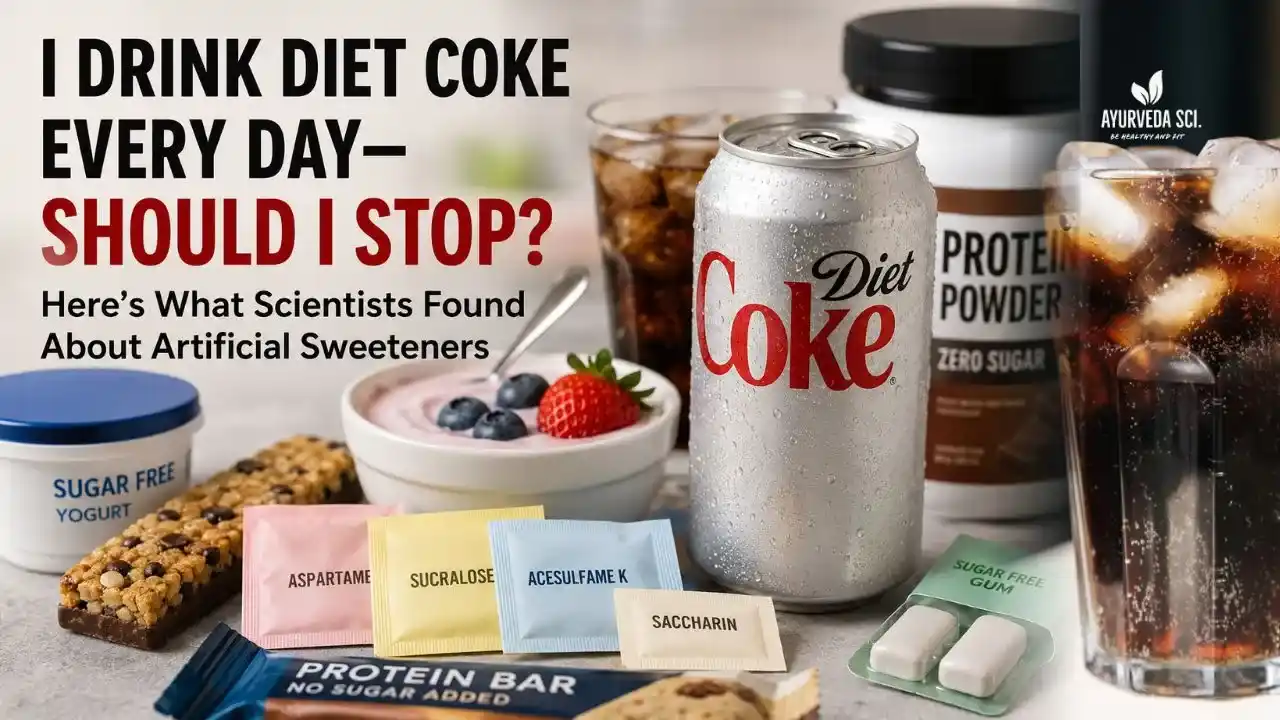
Every morning, millions of people reach for a can of Diet Coke, a sugar-free energy drink, or a “zero sugar” snack believing they’re making a healthier choice. For years, artificial sweeteners have been promoted as a way to cut calories and reduce sugar without giving up sweetness.
But what if the story isn’t that simple?
A new scientific review published in Current Atherosclerosis Reports is drawing attention because it examined years of research on artificial sweeteners and found growing evidence that some may influence gut bacteria, metabolism, and even long-term heart health. The review doesn’t say everyone should stop consuming artificial sweeteners—but it does suggest that people who rely on them every day may want to take a closer look at what the science actually says.
So, if you drink Diet Coke every day, should you be concerned? We’ll answer that question later in this article. But first, let’s take a closer look at what the new study actually found—and what it didn’t.
What the New Study Actually Found
The headlines surrounding artificial sweeteners can be alarming, but the new research deserves a closer look.
Rather than conducting a brand-new experiment, the researchers published a comprehensive review in Current Atherosclerosis Reports. They analyzed findings from numerous randomized controlled clinical trials and large observational studies to understand how non-nutritive sweeteners—including artificial and other low-calorie sweeteners—may influence long-term cardiometabolic health.
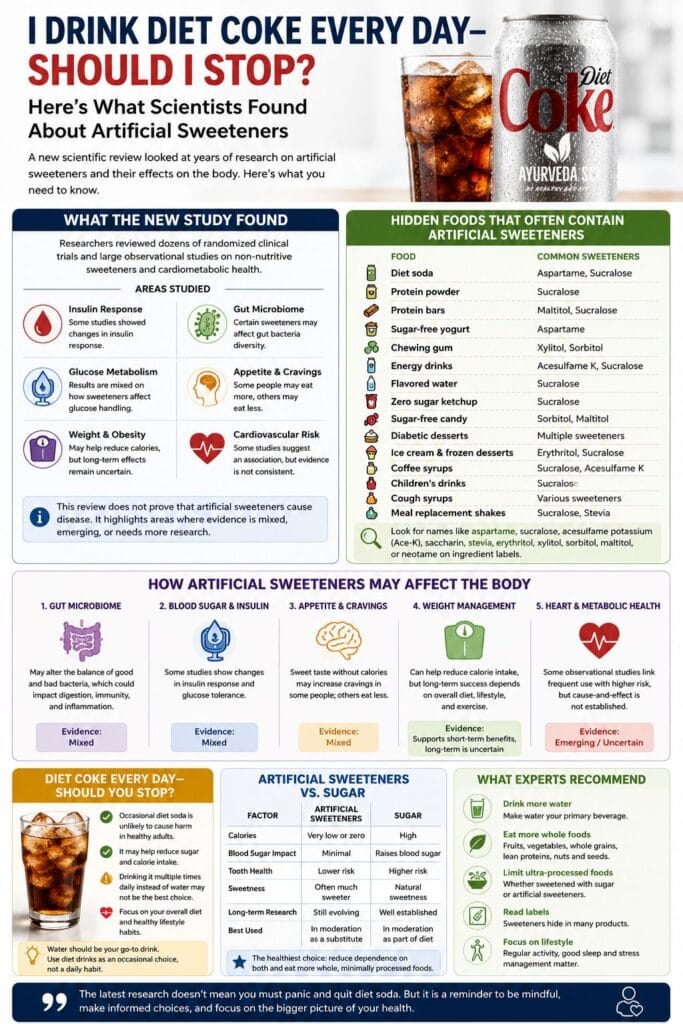
Their review focused on several key areas, including:
- Insulin response: Whether artificial sweeteners affect the body’s ability to regulate blood sugar.
- Gut microbiome: How these sweeteners may alter the balance of beneficial bacteria living in the digestive system.
- Glucose metabolism: Whether they influence how the body processes and uses glucose.
- Appetite and hunger: If consuming sweeteners changes cravings, calorie intake, or feelings of fullness.
- Weight management and obesity: Whether long-term use supports weight loss or is linked to weight gain over time.
- Cardiovascular health: Possible connections with heart disease, stroke, and other cardiometabolic conditions.
What Did the Researchers Conclude?
The review found that the evidence is not entirely consistent. Some studies suggest certain artificial sweeteners may be associated with changes in metabolism, gut bacteria, insulin sensitivity, or cardiovascular risk, while other studies found little or no significant effect.
Overall, the researchers concluded that artificial sweeteners are more biologically active than once believed, but many questions remain unanswered. Factors such as the specific sweetener used, the amount consumed, a person’s overall diet, and individual health differences may all influence the results.
What the Study Does Not Prove
One important point is often missing from social media posts and sensational headlines: this review does not prove that artificial sweeteners directly cause disease.
Because it summarizes evidence from previous research rather than testing participants in a new clinical trial, it can identify patterns and possible associations—but it cannot establish a direct cause-and-effect relationship.
In other words, the review highlights areas where the scientific evidence is evolving and where additional high-quality research is still needed. That means there’s no reason to panic if you occasionally consume sugar-free products, but it does provide another reason to be mindful of how much ultra-processed food and artificially sweetened beverages are part of your daily diet.
How Artificial Sweeteners May Affect the Body
Remember, scientists are still working to understand how artificial sweeteners affect the body over the long term. While research findings don’t always agree, several areas continue to receive close attention.
1. Your Gut Microbiome
Your digestive system is home to trillions of bacteria that help digest food, support your immune system, and even influence metabolism.
Some studies suggest that certain artificial sweeteners may change the balance of these gut bacteria. Researchers believe these changes could affect digestion, inflammation, and the way the body processes nutrients.
However, not every study has reached the same conclusion. Some clinical trials found little or no measurable impact, which is why scientists say more high-quality research is still needed.
2. Blood Sugar and Insulin Response
Artificial sweeteners contain little or no sugar, so they don’t typically cause the same immediate spike in blood glucose as regular sugar.
However, some research suggests that certain sweeteners may influence insulin response or glucose tolerance in some people, particularly when consumed regularly over long periods.
Other studies found no significant changes, making this one of the most debated areas of nutrition research.
For now, experts generally agree that artificial sweeteners can help reduce sugar intake, but they shouldn’t be viewed as a complete solution for managing blood sugar.
3. Appetite and Food Cravings
One reason people choose artificial sweeteners is to reduce calories without giving up sweet flavors.
But scientists are still investigating whether intense sweetness without calories changes how the brain responds to food.
Some studies suggest that sweeteners may increase cravings for sugary foods in certain individuals, causing them to eat more later in the day. Others found that people consumed fewer calories overall because they replaced sugary drinks with low-calorie alternatives.
In short, the evidence remains mixed, and individual responses appear to vary.
4. Weight Loss
Artificial sweeteners can be useful for reducing calorie intake, especially when they replace sugar-sweetened beverages.
However, long-term weight management depends on much more than one ingredient.
Regular physical activity, a balanced diet, adequate sleep, stress management, and overall eating habits remain the biggest factors influencing healthy weight.
Replacing sugar with artificial sweeteners may help some people reduce calories, but it won’t automatically lead to weight loss if the rest of the diet remains high in ultra-processed or calorie-dense foods.
5. Heart and Metabolic Health
The review also examined research on artificial sweeteners and cardiometabolic health, including heart disease, stroke, obesity, and type 2 diabetes.
Some observational studies have reported associations between frequent consumption of artificially sweetened beverages and a higher risk of certain health conditions. However, these studies cannot prove that the sweeteners themselves are responsible. People who choose diet drinks may differ in many other ways—such as their overall diet, body weight, or existing health conditions—that can influence the results.
That’s why researchers continue to call for more long-term clinical trials before drawing firm conclusions.
If artificial sweeteners may influence the body in these ways, the next question is obvious: where are they hiding? Many people consume them every day without realizing it.
Hidden Foods That Often Contain Artificial Sweeteners
| Food | Common Sweeteners |
|---|---|
| Diet soda | Aspartame, Sucralose |
| Sugar-free soft drinks | Aspartame, Acesulfame K |
| Protein powders | Sucralose |
| Protein bars | Maltitol, Sucralose |
| Sugar-free yogurt | Aspartame |
| Chewing gum | Xylitol, Sorbitol |
| Energy drinks | Sucralose, Acesulfame K |
| Flavored sparkling water | Sucralose |
| Sugar-free candy | Sorbitol, Maltitol |
| Ice cream and frozen desserts | Erythritol, Stevia |
| Coffee syrups | Sucralose |
| Children’s flavored drinks | Sucralose |
| Cough syrups | Various sweeteners |
| Meal replacement shakes | Sucralose, Stevia |
| Zero-sugar sauces and ketchup | Sucralose |
Artificial sweeteners aren’t always obvious. Manufacturers often list them by name—such as aspartame, sucralose, acesulfame potassium (Ace-K), saccharin, erythritol, xylitol, or stevia—rather than using the phrase “artificial sweetener.” Reading ingredient labels can help you understand how often these sweeteners appear in your daily diet, especially in products marketed as “sugar-free,” “diet,” or “zero sugar.”
Should You Stop Using Artificial Sweeteners?
Should You Stop Drinking Diet Coke or Other Sugar-Free Drinks?
After reading about the latest research, it’s natural to wonder whether it’s time to throw away every sugar-free drink or snack in your kitchen.
The answer isn’t that simple.
Based on the current evidence, there’s no need to panic or completely eliminate artificial sweeteners overnight. Regulatory agencies around the world continue to consider approved sweeteners safe when consumed within their acceptable daily intake limits.
However, the new review serves as an important reminder that “sugar-free” doesn’t automatically mean “healthier.” Scientists are learning that some artificial sweeteners may interact with the body in ways that weren’t fully understood years ago, particularly when consumed regularly over long periods.
Who May Benefit From Artificial Sweeteners?
Artificial sweeteners can still play a useful role for many people.
For example, they may help:
- People with diabetes reduce their sugar intake.
- Individuals trying to cut back on sugary drinks.
- Those looking to lower their overall calorie consumption.
- People transitioning away from high-sugar diets.
For these individuals, replacing sugary beverages with low- or no-calorie alternatives may be a practical step toward healthier eating—provided those drinks don’t replace other healthy habits.
When Should You Be More Mindful?
You may want to take a closer look at your consumption if:
- You drink multiple cans of diet soda every day.
- Most of your beverages are artificially sweetened.
- Your diet relies heavily on ultra-processed foods labeled “diet,” “light,” or “zero sugar.”
- You rarely drink plain water.
- You consume several products containing artificial sweeteners throughout the day without realizing it.
Even if each individual product contains only a small amount, the total exposure from multiple foods and drinks can add up over time.
What Health Experts Recommend Instead
Most nutrition experts agree on one important point: focus on your overall diet rather than a single ingredient.
Instead of worrying only about artificial sweeteners, consider these healthier habits:
Drink More Water
Water should remain your primary beverage. If plain water feels boring, try sparkling water with lemon, cucumber, or fresh fruit for natural flavor.
Eat More Whole Foods
Fresh fruits, vegetables, whole grains, legumes, nuts, and lean proteins provide nutrients that highly processed foods simply can’t replace.
Reduce Both Added Sugar and Ultra-Processed Foods
A healthy diet isn’t about replacing sugar with another sweetener—it’s about reducing the need for overly sweet foods in the first place.
Read Ingredient Labels
Many products marketed as “healthy,” “low calorie,” or “zero sugar” still contain artificial sweeteners. Checking ingredient lists can help you make more informed choices.
Don’t Chase “Healthy” Marketing Claims
Terms like “diet,” “light,” “fit,” or “zero sugar” don’t automatically make a product nutritious. Look at the overall ingredient list and nutritional profile instead of relying on the front of the package.
Artificial Sweeteners vs. Sugar: Which Is Better?
This isn’t a simple winner-versus-loser comparison.
| Factor | Artificial Sweeteners | Sugar |
|---|---|---|
| Calories | Very low or zero | High |
| Blood sugar impact | Usually minimal | Raises blood sugar |
| Tooth decay | Lower risk | Higher risk |
| Sweetness | Often much sweeter than sugar | Natural sweetness |
| Long-term research | Still evolving | Excess intake is well known to increase health risks |
| Best used | In moderation as a sugar substitute | In moderation as part of a balanced diet |
For most people, the healthiest choice isn’t choosing one over the other—it’s reducing dependence on both by gradually adapting to less sweetness overall.
Frequently Asked Questions
Are artificial sweeteners worse than sugar?
Not necessarily. Artificial sweeteners reduce calorie and sugar intake, but research is still exploring their long-term effects. Excessive sugar consumption, on the other hand, has well-established links to obesity, type 2 diabetes, and heart disease.
Which artificial sweetener is considered the safest?
Different sweeteners have different safety evaluations. Approved sweeteners such as aspartame, sucralose, stevia, saccharin, and acesulfame potassium are considered safe by major food safety authorities when consumed within recommended limits.
Can artificial sweeteners affect gut bacteria?
Some studies suggest they may influence the gut microbiome, while others have found little or no effect. Scientists are continuing to investigate this area.
Is it okay to drink Diet Coke every day?
Current evidence doesn’t suggest that an occasional or moderate intake of Diet Coke is harmful for most healthy adults. However, if it has become your primary beverage, experts generally recommend increasing your water intake and focusing on a balanced overall diet.
Final Verdict
The latest scientific review doesn’t prove that artificial sweeteners cause disease, but it does add to a growing body of research suggesting they may have more complex effects on the body than previously believed.
If you enjoy an occasional diet soda or sugar-free snack, there’s no reason to panic. But if artificial sweeteners appear in nearly every drink and processed food you consume, this may be a good opportunity to reassess your eating habits.
Ultimately, the biggest gains in long-term health are still likely to come from simple, sustainable habits: drinking more water, eating more whole foods, staying physically active, and limiting highly processed products—whether they’re sweetened with sugar or artificial alternatives.
Read More Articles