
In the ancient science of Ayurveda, which has guided holistic health practices for over 5,000 years, diet is not merely about nourishment but a cornerstone of balance and well-being. One of its most intriguing and practical concepts is Viruddha Ahara, often translated as “incompatible foods” or “antagonistic diet.” This principle highlights how certain food combinations, preparation methods, quantities, timings, or environmental factors can disrupt the body’s natural harmony, leading to toxin accumulation and disease manifestation.
Derived from classical texts like the Charaka Samhita and Sushruta Samhita, Viruddha Ahara is described as any intake that provokes the doshas (Vata, Pitta, and Kapha)—the fundamental bio-energies governing physiological functions—without expelling them, resulting in internal imbalances. In an era dominated by fast food, processed meals, and eclectic dietary trends, revisiting this concept is crucial for preventing modern lifestyle diseases.
As an enthusiast or practitioner in the Ayurvedic community (noting your handle @Ayurveda Sci), you might already appreciate how Viruddha Ahara extends beyond simple allergies to a deeper understanding of food synergies. This article delves into its details, types, examples, scientific correlations, and most importantly, why adhering to these guidelines is essential for optimal health.
Historical and Conceptual Foundations
Ayurveda’s view on diet emphasizes Ahara (food) as one of the three pillars of life, alongside Nidra (sleep) and Brahmacharya (celibacy or moderation). The term “Viruddha” stems from Sanskrit, meaning “opposed” or “contradictory.” Acharya Charaka, in his seminal work Charaka Samhita (Sutra Sthana 26/81-103), elaborates that Viruddha Ahara disturbs the equilibrium of bodily tissues (dhatus), weakens Agni (digestive fire), and promotes Ama (undigested toxins), which is the root cause of many ailments. Sushruta adds that such incompatibilities can lead to severe conditions like Visarpa (erysipelas) or even death if ignored over time.
Unlike modern nutrition, which focuses on calories, macros, and micronutrients, Ayurveda considers qualitative aspects: the Rasa (taste), Virya (potency), Vipaka (post-digestive effect), and Prabhava (unique action) of foods. When these clash, they create disharmony. For instance, foods with opposing Virya (hot vs. cold potency) can confuse the digestive system, leading to incomplete metabolism.
The 18 Types of Viruddha Ahara

Charaka classifies Viruddha Ahara into 18 categories, each addressing a specific incompatibility. These are not rigid rules but guidelines tailored to an individual’s Prakriti (constitution), Agni, and environment. Here’s a detailed breakdown:
- Desha Viruddha (Place Incompatibility): Consuming foods opposite to the region’s climate, e.g., dry, light foods in a desert (arid) area where unctuous foods are needed.
- Kala Viruddha (Time/Season Incompatibility): Eating heating foods like spicy curries in summer or cooling ones like yogurt in winter.
- Agni Viruddha (Digestive Fire Incompatibility): Heavy, oily meals when Agni is weak (e.g., during illness).
- Matra Viruddha (Quantity Incompatibility): Unequal portions, such as excessive ghee with minimal rice.
- Satmya Viruddha (Habituation Incompatibility): Foods contradicting one’s adapted diet, e.g., suddenly switching to a raw vegan diet if accustomed to cooked meals.
- Dosha Viruddha (Dosha Incompatibility): Aggravating one’s dominant dosha, like Pitta types eating excessive sour foods.
- Sanskara Viruddha (Processing Incompatibility): Improper preparation, such as heating honey, which turns it toxic.
- Virya Viruddha (Potency Incompatibility): Combining hot and cold potency foods, e.g., fish (hot) with milk (cold).
- Koshta Viruddha (Bowel Nature Incompatibility): Laxative foods for those with soft bowels.
- Avastha Viruddha (State Incompatibility): Stimulants during fatigue or sedatives when alert.
- Krama Viruddha (Order Incompatibility): Eating sweets before savory meals, disrupting digestion sequence.
- Parihara Viruddha (Contraindication Incompatibility): Ignoring post-meal restrictions, like exercising immediately after eating.
- Upachara Viruddha (Treatment Incompatibility): Foods opposing ongoing therapies, e.g., cold drinks during fever treatment.
- Paka Viruddha (Cooking Incompatibility): Overcooking or undercooking, leading to indigestible forms.
- Samyoga Viruddha (Combination Incompatibility): Mixing incompatible items, like milk with bananas.
- Hrdaya Viruddha (Palatability Incompatibility): Unpalatable foods that cause aversion.
- Sampat Viruddha (Quality Incompatibility): Spoiled or impure ingredients.
- Vidhi Viruddha (Rule Incompatibility): Violating dietary etiquette, like eating in unclean places.
These categories underscore Ayurveda’s holistic approach, considering not just the food but the context of consumption.
Common Examples of Viruddha Ahara
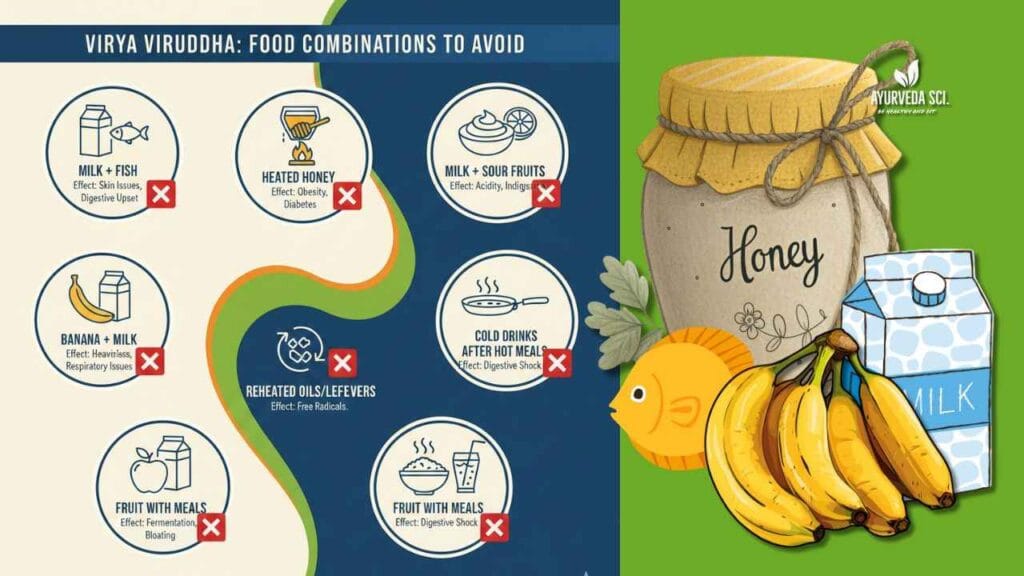
Practical illustrations make this concept relatable. Here are some frequently cited examples from Ayurvedic texts and modern interpretations:
- Milk + Fish: A classic Virya Viruddha; milk’s cooling effect clashes with fish’s heating potency, potentially causing skin eruptions or digestive issues.
- Honey Heated: Sanskara Viruddha; heating alters honey’s structure, making it akin to poison and leading to obesity or diabetes.
- Milk + Sour Fruits (e.g., Yogurt + Citrus): Samyoga Viruddha; acids curdle milk proteins, impairing digestion and causing acidity.
- Banana + Milk: Produces heaviness and toxins, often linked to respiratory problems.
- Reheated Oils or Leftovers: Paka Viruddha; repeated heating generates free radicals.
- Cold Drinks After Hot Meals: Kala Viruddha; shocks the digestive system.
- Fruit with Meals: Fruits digest quickly; mixing with slower-digesting grains leads to fermentation and bloating.
This illustration shows common Viruddha combinations and their effects.
Another example:
Depicting food pairings to avoid for balanced digestion.
Health Impacts and Scientific Correlations
The consequences of ignoring Viruddha Ahara are profound. Ayurveda warns of conditions like Kushta (skin diseases), Visphota (blisters), Pandu (anemia), Shandhya (infertility), Amlapitta (acid reflux), and even psychological issues like irritability. Chronic exposure can weaken immunity, promote inflammation, and contribute to autoimmune disorders.
From a scientific lens, modern research correlates these with biochemical processes. For instance:
- Protein Interactions: Milk and fish proteins may form indigestible complexes, leading to gut inflammation and leaky gut syndrome.
- Oxidative Stress: Heated honey produces hydroxymethylfurfural (HMF), a compound linked to cellular damage and cancer risk.
- Microbiome Disruption: Incompatible combos alter gut flora, fostering dysbiosis, which is tied to obesity, diabetes, and mental health issues.
- Allergies and Intolerances: Many Viruddha examples mimic lactose intolerance or histamine reactions, explaining why some people experience bloating or rashes.
Studies, such as those in the Journal of Ayurveda and Integrative Medicine, suggest that following these rules reduces inflammatory markers like CRP and improves metabolic health. In essence, Viruddha Ahara aligns with emerging fields like nutrigenomics, where food interactions influence gene expression.
Why We Must Follow Viruddha Ahara Guidelines
Adhering to Viruddha Ahara isn’t about restriction but empowerment. Here’s why it’s imperative:
- Prevention Over Cure: In a world plagued by chronic diseases (diabetes affects over 500 million globally), avoiding incompatibilities prevents Ama buildup, the precursor to most illnesses. It’s a proactive strategy, cheaper and safer than treatments.
- Enhanced Digestion and Energy: Proper combinations strengthen Agni, leading to better nutrient absorption, sustained energy, and mental clarity. Ignoring them causes fatigue, as seen in post-meal slumps.
- Dosha Balance for Personalized Health: Tailored to your Prakriti, it addresses individual vulnerabilities—e.g., Vata types avoid dry-cold mixes to prevent anxiety.
- Long-Term Wellness and Longevity: Ayurvedic texts promise that avoiding Viruddha extends lifespan by reducing systemic inflammation, a key aging factor. Modern correlations link it to reduced risk of heart disease and cancers.
- Cultural and Environmental Relevance: In regions like India, where seasonal eating is traditional, it promotes sustainability and harmony with nature.
- Mental and Emotional Benefits: Balanced diet influences the mind; incompatibilities can aggravate Rajas and Tamas gunas, leading to stress or depression.
In today’s fast-paced life, with hybrid cuisines and ultra-processed foods, Viruddha Ahara explains rising epidemics like IBS and allergies. Following it fosters mindful eating, reducing overconsumption and waste.
Practical Tips for Modern Application
- Consult an Ayurvedic practitioner for personalized advice.
- Eat mindfully: Separate fruits from meals by 1-2 hours.
- Avoid common pitfalls: No tea/coffee with meals (tannins inhibit iron absorption).
- Use herbs like ginger or cumin to mitigate mild incompatibilities.
- Track your body: Journal reactions to combinations.
For visual guidance:
This chart outlines key incompatibilities for quick reference.
Conclusion
Viruddha Ahara is a timeless Ayurvedic gem, reminding us that “we are what we eat and how we eat it.” By understanding and avoiding these incompatibilities, we not only prevent diseases but cultivate vitality, resilience, and harmony. In 2026, as integrative medicine gains traction, embracing this could bridge ancient wisdom with modern science for a healthier future. As Charaka wisely stated, “The wise should avoid Viruddha Ahara to preserve life.” Let’s honor that for ourselves and generations to come.