We’ve all heard it a thousand times: “If you don’t eat eggs, where will you get your protein?”
Well, the truth is that many traditional Indian vegetarian foods pack more protein per 100 grams than eggs — and they come with better digestibility, zero cholesterol, and none of the ethical or hormonal concerns that come with modern factory-farmed eggs.
One large egg (50 g) gives you ~6 g protein.
That means 100 g of egg gives roughly 12–13 g protein.
7 Vegetarian Foods That Give You More Protein Than Egg
Here are 7 desi vegetarian foods that beat that number — easily, cheaply, and deliciously.
1. Peanuts (Moongphali) – 26 g protein / 100 g
Yes, the same peanuts you munch during movies. Raw or lightly roasted peanuts have double the protein of eggs. A small 30 g handful (a little over one tablespoon of peanut butter) already matches one whole egg’s protein.
Bonus: Rich in healthy fats, vitamin E, magnesium, and almost zero carbs if you skip the salted/fried versions.
2. Black Urad Dal (Whole) – 24–25 g protein / 100 g
The dal (pulse) used to make Dal Makhani and South Indian idli/dosa batter. Traditional wrestlers (pehlwans) in akharas swear by urad dal + milk/sattu combos for strength. It’s also one of the highest sources of plant-based iron.
3. Chana Sattu (Roasted Gram Flour) – 22–23 g protein / 100 g
The ultimate desi protein powder. Bihar and Uttar Pradesh athletes drink sattu sharbat daily. Just 40–50 g mixed in water or buttermilk gives you 10–12 g protein — perfect post-workout drink, zero cooking required.
4. Roasted Chana / Bhuna Chana – 19–21 g protein / 100 g
Your evening chai’s best friend. 100 g of roasted black or brown chana beats two whole eggs in protein and keeps you full for hours because of its insane fiber content.
5. Green Moong Dal (Split or Whole) – 24 g protein / 100 g
Lighter on the stomach than urad, yet almost identical in protein. Sprouted moong takes the protein quality even higher because sprouting increases amino-acid availability.
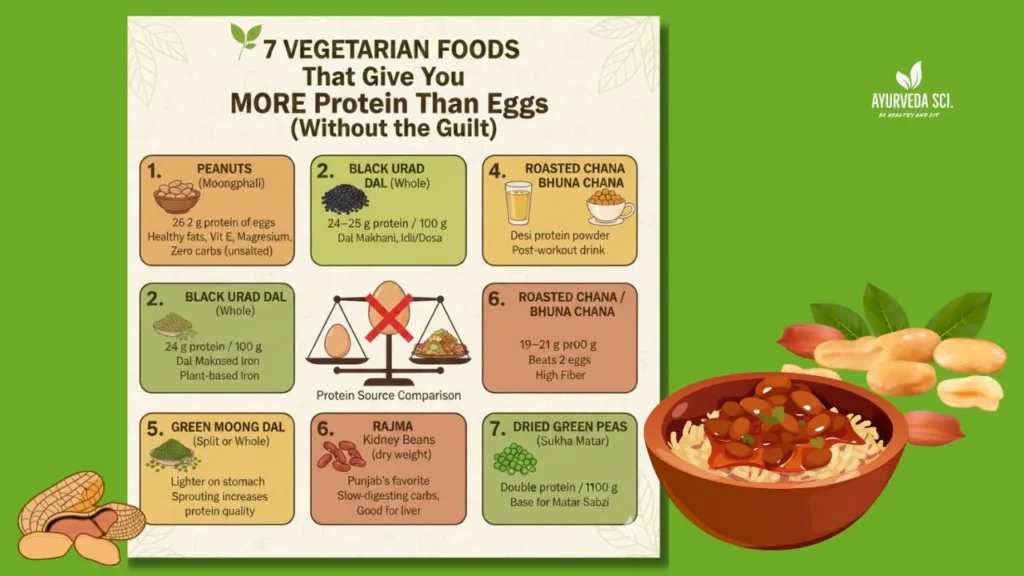
6. Rajma (Kidney Beans) – 22–24 g protein / 100 g (dry weight)
Punjab’s favorite. 100 g uncooked rajma (which becomes ~250 g after soaking and boiling) gives you 22–24 g protein plus slow-digesting carbs that keep energy steady.
Bonus point : Cooked have same amount of protein as uncooked and It’s good for liver.
7. Dried Green Peas (Sukha Matar) – 24 g protein / 100 g
The base for matar sabzi or ghugni. Most people don’t realize that dry green peas have almost double the protein of eggs. Soak overnight and pressure-cook — ready in minutes.
Quick Comparison Table (per 100 g)
| Food | Protein (g) | Approx. Cost (₹ per kg) | Bonus Points |
|---|---|---|---|
| Egg | 12–13 g | 70–90 | Cholesterol, factory farming |
| Peanuts | 26 g | 150–200 | Healthy fats, cheap |
| Black Urad Dal | 24–25 g | 130–180 | Iron, traditional strength food |
| Chana Sattu | 22–23 g | 150–300 | Instant drink, cools body |
| Roasted Chana | 19–21 g | 100–170 | Zero prep, travel-friendly |
| Green Moong Dal | 24 g | 140–220 | Easy to digest, sprouts well |
| Rajma | 22–24 g | 150–200 | Fiber king, tastes amazing |
| Dried Green Peas | 24 g | 120–170 | Underrated protein bomb |
Why These Beat Eggs for Most Indians
- Zero cholesterol & saturated fat
- Higher fiber → better gut health & blood sugar control
- Naturally complete or near-complete amino-acid profile when you mix dal + grains (e.g., dal-chawal, rajma-chawal)
- Cheaper in the long run
- No risk of salmonella or antibiotic residues common in commercial eggs
- Culturally familiar — no need to force-feed yourself something you don’t enjoy
Simple Daily Plan to Hit 70–80 g Protein (Vegetarian)
Breakfast: 50 g sattu sharbat → 11–12 g
Lunch: 80 g uncooked rajma (200 g cooked) + rice → 18–20 g
Evening: 50 g roasted chana or peanuts → 10–13 g
Dinner: 80 g uncooked moong/urad dal (200 g cooked) + 2 rotis → 20 g
Extras: Curd, milk, paneer if you eat dairy → easily 10–15 g more
Total: 70–90 g protein without eggs, chicken, or expensive whey.
Final Word
Stop believing the myth that eggs are irreplaceable. Our grandmothers built strong families on dal, sattu, peanuts, and seasonal sabzis long before protein shakes and cage-free eggs became marketing buzzwords.
Eat desi, stay strong — naturally.
Which of these foods are already in your kitchen? Drop a comment and let me know!